Choose theme
AI Radar
NVIDIA Cosmos 3 Shows Why World Models Are Becoming a Physical AI Story
NVIDIA has released Cosmos 3, an open physical-AI model family designed to connect reasoning, world generation, and action generation across text, images, video, audio, and action data. The headline sounds technical, but the reader signal is simple: AI companies are moving beyond chat and image generation toward models that can simulate possible physical futures. That may help robotics, autonomous vehicle training, video analytics, and synthetic data workflows, but it does not make generated futures the same as reliable real-world control.
A careful read of available sources, not a verdict. Open the original materials when details matter.
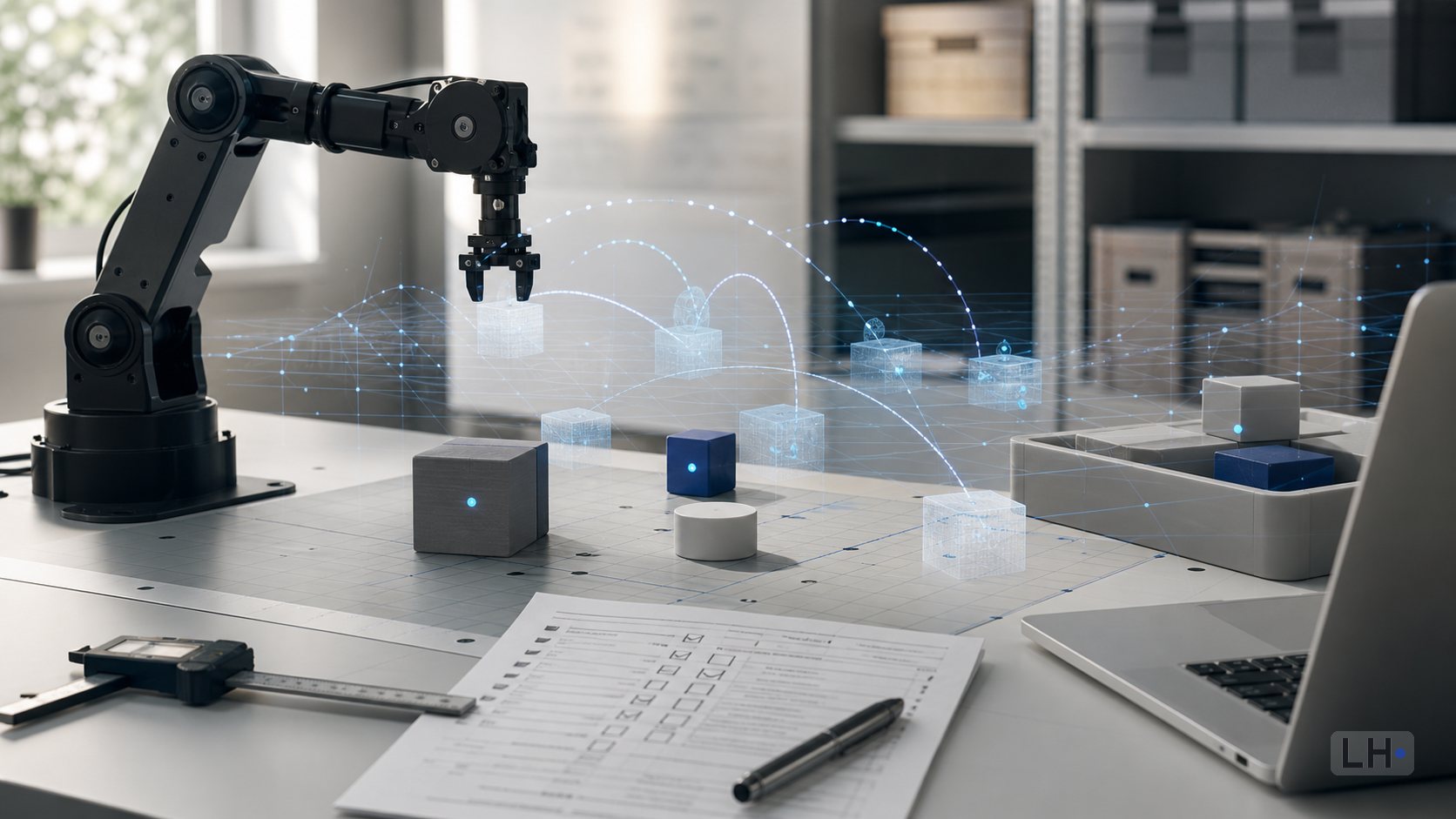
What changed
AI is moving toward physical-world simulation
Cosmos 3 points to a wider shift from models that mostly answer or generate media toward models that can reason about scenes, actions, and possible outcomes.
Why people noticed
It mixes video, sound, reasoning, and action
NVIDIA says Cosmos 3 can work across language, images, video, audio, and action sequences, which makes it more than a normal video model.
What to watch
Simulated futures are useful, not final proof
World models may help generate training data and test scenarios, but their outputs still need validation because physical dynamics, object motion, and reasoning can be wrong.
What happened
NVIDIA released Cosmos 3 for physical-AI workflows
NVIDIA has introduced Cosmos 3 inside its Cosmos platform, which it describes as a set of world foundation models plus data processing, training, and evaluation frameworks for physical AI.
The company calls Cosmos 3 an open physical-AI foundation model with native reasoning, world generation, and action generation, built on a Mixture-of-Transformers architecture.
The GitHub repo describes Cosmos 3 as an omnimodal world model family that can jointly process and generate language, images, video, audio, and action sequences.
Axios reported on June 1, 2026 that NVIDIA unveiled Cosmos 3 as an open AI world model for robots, autonomous vehicles, and other physical systems. Treat that as independent context alongside NVIDIA source material, not as proof that deployment questions are settled.
Why people noticed
This is more than another video generator
Cosmos 3 attracted attention because it connects reasoning, generation, simulation, and action in one physical-AI story.
NVIDIA points the model family at robotics, autonomous vehicle training, video analytics AI agents, synthetic video data, and policy-model workflows, not only entertainment or content generation.
The GitHub repo separates the system into two runtime surfaces: a Reasoner for text and vision inputs that returns text, and a Generator that can work with text, vision, sound, and action inputs to produce vision, sound, and action outputs.
Axios highlights action data as a key difference from a regular video generator. In plain English, the story is not just how a scene looks, but what could happen when something moves, turns, grips, slips, or changes state.
Why it matters
World models are a way to reason about possible physical change
A world model is roughly a model that tries to represent how a scene or environment may change. In this context, that means a system may help imagine possible futures, generate training scenarios, or evaluate actions before anything is tested in the physical world.
A robot does not only need to see a cup. It may need to predict what happens if a gripper moves, slips, pushes, lifts, or blocks something. A driving system does not only need pixels; it needs useful expectations about motion, timing, and nearby objects.
That is why a physical-AI model family is interesting for readers who do not build robots. It shows that AI work is moving toward systems that deal with movement, sensors, spaces, and action, not only sentences and static images.
But possible futures are not proof. If a model generates a video, an action sequence, or a plan, that output still has to be checked against real constraints, real hardware, and the failure modes listed by the model developer.
Why people noticed
NVIDIA is also building a physical-AI platform layer
This is also a platform story. NVIDIA is not only presenting hardware; it is building open models, source code, model cards, training and evaluation tools, and developer surfaces around physical AI.
The Cosmos GitHub repo points to a broader ecosystem: Cosmos Framework for training and serving world models, Cosmos Curator for data curation, and Cosmos Evaluator for world-generation and reasoning outputs.
Axios frames the move as NVIDIA continuing beyond chips into AI models and software, positioning itself as a platform for physical-AI development.
That does not mean every team will adopt the ecosystem or that hardware dependence is trivial. It means the next AI infrastructure story may include models, data tools, simulators, evaluation systems, and chips working together.
What to watch
Ask better questions when a model claims to simulate the world
The practical habit is to look past the demo and ask what kind of output is being generated.
Was the model predicting video, sound, an action sequence, a plan, or a text explanation? What inputs did it use? Was anything validated outside the model? Is the workflow meant for training and testing, or for real-world deployment?
Also ask what the source itself lists as failure modes. In this case, the GitHub repo names temporal inconsistency, unstable object or camera motion, inaccurate sound-video alignment, imperfect action-state consistency, object morphing, inaccurate 3D structure, and implausible physical dynamics.
That list is useful because it turns a broad claim into checkable caution. If a simulated future can be wrong in those ways, readers should treat it as a tool for exploration, not as untouched reality.
What remains unclear
The hardest questions are outside polished demos
It remains unclear how well Cosmos 3 works across messy real-world cases outside demos, benchmarks, and controlled examples.
It is also unclear how reliable generated action data will be across different robot bodies, driving scenarios, camera setups, and industrial environments.
Developers still need ways to validate synthetic data before using it in safety-sensitive workflows, especially when errors could affect people, property, or public spaces.
Licensing, openness, hardware requirements, tooling maturity, and ecosystem dependence may also shape adoption. The model being inspectable does not automatically make it easy, cheap, or appropriate for every team.
What remains unresolved is whether omnimodal world models become general building blocks for many builders, or remain specialized tools mostly used by teams with enough compute, data, and validation discipline.
LifeHubber take
The useful bit is not that robots are solved
The useful bit is not that robots are solved. It is that AI development is moving toward models that can imagine and reason about physical change.
That is a meaningful shift because many real AI applications do not end with a sentence on a screen. They involve movement, timing, objects, sensors, spaces, and risk.
Cosmos 3 is worth watching because it puts reasoning, generation, and action into one physical-AI story. It also shows how model releases are becoming platform releases, with tools, evaluation surfaces, and ecosystem hooks around them.
But the trust question remains the same: simulated futures are only useful when people understand what was generated, what was checked, and where the model can fail.
AI Radar note
How to read this article
AI Radar is LifeHubber's careful reading of available reporting and source material, not professional advice or a final verdict. Details can change, sources can update, and meaning may vary by product, organization, or location. Open the original materials and seek qualified advice where needed.
Source links
Sources and reporting
Source links are provided so readers can check NVIDIA source material, the model card, and independent reporting directly. LifeHubber is not treating generated simulations, action data, or model outputs as safety-certified real-world control.
What to explore next
World models and physical AI projects
A generative 3D world-model project and robot-learning workflows offer two practical routes into the topic.